Water quality is one of those home concerns that can quietly sit in the background for years. You notice a slight chlorine smell in the shower, a different taste in your drinking water, or perhaps some buildup around the kitchen faucet. None of these things necessarily feels urgent, so life goes on.
But eventually you start wondering: is there a better way to manage the water coming into the house?
For many homeowners, the answer begins with understanding what is actually in the water and deciding whether treatment should happen at one tap or throughout the home. That distinction matters more than it may seem.
Why Chlorine Gets Attention
Municipal water systems commonly use chlorine as part of the disinfection process. It plays an important role in controlling microorganisms, but some people dislike the taste or smell it can leave behind.
You might notice it most strongly when filling a glass, preparing coffee, or taking a hot shower. Warm water can make odors especially noticeable, which is why a bathroom may sometimes smell more strongly of chlorine than the kitchen.
The good news is that appropriate filtration can help reduce chlorine taste and odor. The key word is “appropriate,” because different filters have different capabilities.
When a Whole-Home Filter Makes Sense
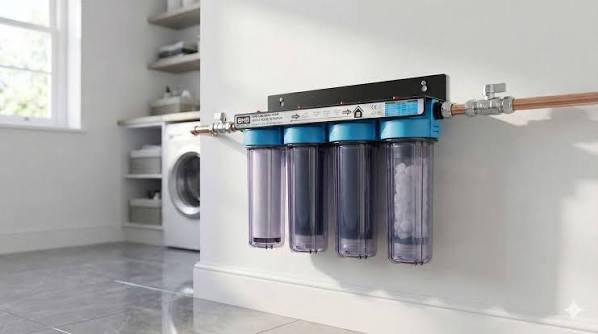
If chlorine is noticeable throughout your property, a whole home chlorine filter may be worth considering. Instead of treating water only at one faucet, this type of approach is designed to address chlorine at a central point in the home’s plumbing.
That can mean treated water is available at showers, bathroom sinks, laundry areas, and kitchen taps, depending on the system design.
For households that use a lot of water every day, whole-home treatment can also feel more convenient. You don’t have to think about which faucet has a filter and which one doesn’t.
Still, whole-home filtration isn’t automatically the right answer. Your water source, chlorine levels, household size, and other water-quality concerns should all be considered before choosing equipment.
A Kitchen Filter Can Still Be Useful
Sometimes your main concern is drinking and cooking water. In that situation, point-of-use filtration may be perfectly reasonable.
A kitchen filter can focus treatment where it’s needed most, without requiring a larger whole-home installation.
This can be especially useful for homeowners who are dealing with a specific taste or odor issue but don’t have broader water-quality concerns.
The decision really comes down to how you use water and what you want to accomplish. If only the kitchen water bothers you, treating the entire house may be unnecessary.
Understanding Filter Cartridges
Filters don’t work forever. Eventually, the media inside them becomes less effective and the cartridge needs replacement.
Some systems use single filter cartridges, while others contain multiple stages designed to address different water characteristics. Cartridge size, filter media, water usage, and incoming water quality can all influence how long a filter lasts.
It’s important not to assume that a cartridge should be replaced only when the water starts tasting strange. Depending on the system, waiting too long can reduce filtration performance.
Check the manufacturer’s recommended replacement schedule and adjust it if your actual household water use is significantly higher or lower.
Why One Filter Isn’t Always Enough
Water quality isn’t always about one problem.
A home may have chlorine taste and odor along with sediment or hard water. In another property, the main concern could be a specific contaminant that requires specialized treatment.
This is why buying a filter simply because it has excellent reviews can be misleading. A product may work extremely well for one issue and do very little for another.
Before choosing a system, identify your home’s actual filtration needs. A water test can be a helpful starting point, especially if you’re unsure what is causing a particular problem.
Whole-Home vs. Point-of-Use Filtration
There isn’t a universal winner between whole-home and point-of-use systems.
Whole-home filtration treats water more broadly and can be convenient when the concern affects multiple areas of the house. Point-of-use systems are more targeted and may cost less initially.
Consider how many people live in your home, how much water you use, and where the problem is most noticeable.
If your family drinks and cooks with filtered water but doesn’t care about chlorine in the shower, a kitchen system may be enough. If chlorine odor is noticeable everywhere, whole-home treatment may offer a more complete solution.
Don’t Forget Installation and Maintenance
A filtration system isn’t simply a box you install and forget.
Whole-home equipment may require professional installation because it connects to the home’s main water line. Cartridge-based systems need regular replacements, while larger systems may require additional maintenance.
Ask about installation costs before buying. Also find out how much replacement filters cost and how often they typically need changing.
A system that seems inexpensive initially can become costly if replacement parts are unusually expensive or difficult to obtain.
Look Beyond the Price Tag
Price is important, but it’s not the only thing that matters.
Look at the system’s capacity, filtration technology, expected lifespan, maintenance requirements, warranty, and availability of replacement components.
It’s also worth asking what the filter is actually certified to reduce. Marketing language can sometimes be vague, so specific performance information is much more useful.
A trustworthy water-treatment professional should be able to explain what the equipment does—and just as importantly, what it doesn’t do.
A Better Approach to Everyday Water
Good filtration doesn’t have to be complicated. Start with the water itself. Identify the problem, understand the source, and then choose a treatment method that fits your home.
For some families, a simple kitchen filter will do the job. For others, a whole-home system may provide greater convenience and broader treatment.
The smartest choice isn’t the system with the longest feature list. It’s the one that addresses your actual concerns without creating unnecessary expense or maintenance.
After all, water is used throughout your home every single day. Taking the time to choose the right filtration approach can make those everyday moments—from a morning shower to an evening glass of water—just a little more pleasant.